
Riksbank Holds Rate at 1.75% as Swedish Inflation Falls Below Target
Sweden's Riksbank held its policy rate at 1.75% for a fifth consecutive meeting on Friday, as inflation falls below target and the economy stays subdued.

Sweden's Riksbank held its benchmark rate at 1.75% on Friday, leaving borrowing costs unchanged for the fifth consecutive meeting. The decision takes effect from 13 May 2026.
What the Board Decided
The Riksbank's executive board voted to maintain the current rate. In its statement, the board identified three factors shaping the decision:
- Inflation below target: Recent price data have come in materially below the Riksbank's March 2026 forecast.
- Subdued growth: Domestic economic activity remains weak, with no demand-driven pressure for tightening.
- Geopolitical risk: The risk of the Middle East conflict driving up energy and commodity prices has increased, adding uncertainty to the inflation path.
The board concluded that the current rate level provides a solid starting point for adjusting monetary policy if conditions shift. The next rate decision is scheduled for 17 June 2026.
Why Inflation Fell Below Target
Sweden's disinflation has moved faster than the Riksbank's own models anticipated. After a run of rate increases in 2022 and 2023, the cooling has continued longer and more sharply than forecast. Household consumption remains under pressure, wage growth is moderating, and there is limited evidence of demand-driven price rises.
The central bank is watching one risk closely: supply disruptions from the Middle East conflict could push energy costs higher independent of domestic demand conditions. If Brent crude rises materially from current levels and sustains those gains, the second-round effects on Swedish prices could outpace the current disinflation trend.
That tension between weak domestic demand pulling inflation down and geopolitical supply shocks pushing it up explains why the board chose to hold rather than cut.
What to Watch Before June
Before the 17 June decision, three data points matter:
- Swedish CPI for April and May: A rebound toward 2% would strengthen the case for an extended pause, possibly tightening.
- Energy prices: Brent crude trajectory over the next six weeks is a direct input into the Riksbank's inflation model.
- Riksbank's June tone: Language at the June press conference will signal whether the hold is indefinite or approaching a turn.
For investors with exposure to Swedish fixed income, the fifth consecutive hold confirms that short-duration bonds and money market instruments remain in a low-yield environment. Swedish equities and real assets continue to offer better risk-adjusted alternatives while rates stay below neutral.
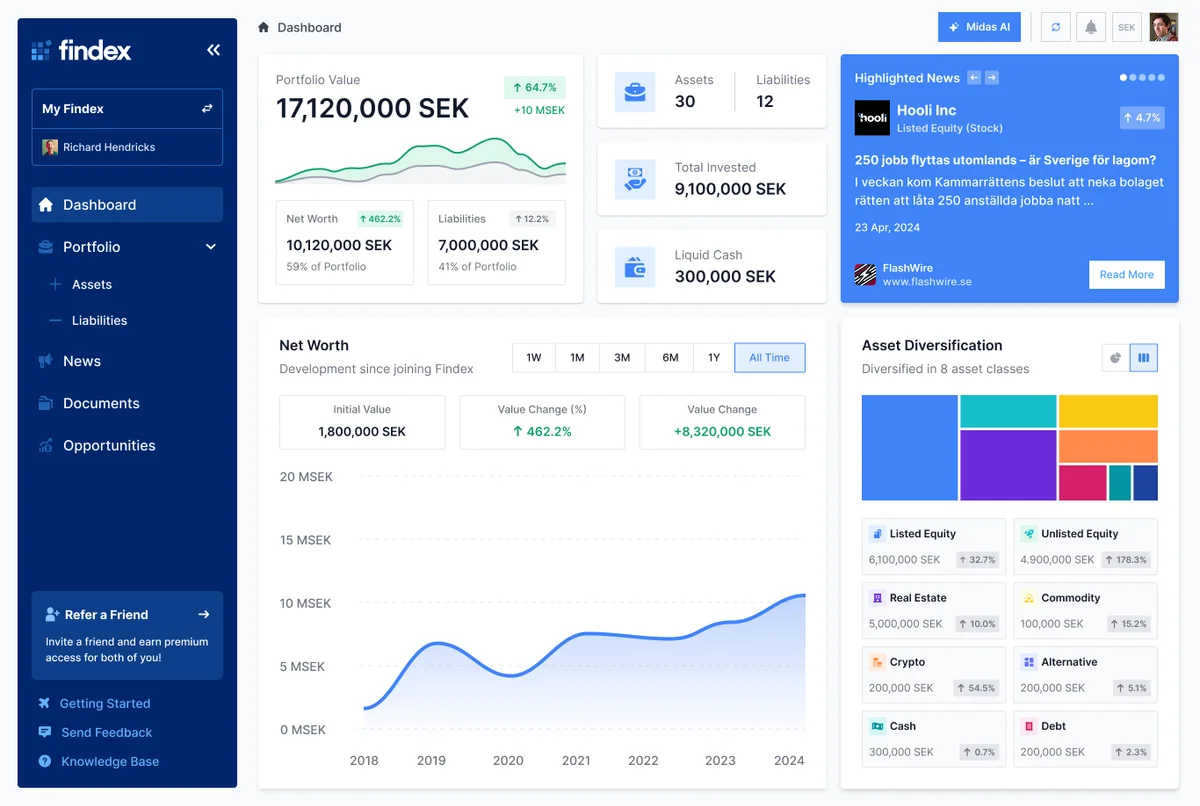
Platforms that consolidate Swedish brokerage accounts, bank holdings, and real property in one net worth view can help investors see how rate sensitivity is distributed across a full portfolio as the June decision approaches.
Keep reading
Related trends
RBA Raises Cash Rate to 4.60%, a 15-Year High, on Energy-Driven Inflation
The Reserve Bank of Australia raised its cash rate 25bp to 4.60%, a 15-year high and its fourth hike of 2026, citing energy-driven inflation risks.

Oil and Bond Yields Surge as Trump Rejects Iran's Hormuz Proposal
Trump's rejection of Iran's Hormuz proposal sent oil toward $107 a barrel and pushed the 10-year Treasury yield to its highest level since 2007.
Global Bond Selloff Pushes 30-Year Treasury Yield to Highest Since 2004
A worldwide bond selloff has pushed US 30-year Treasury yields to their highest since 2004, driven by inflation, deficits and rising oil prices.
Your complete net worth, finally in one place.
Join investors using Findex to consolidate, track, and grow their portfolios. One view of everything you own.
No payment information required.