
How Do I Access Private Market Investments as an Individual Investor?
Access to private markets is more available than ever, but management requires precision. Compare access strategies, understand persistent barriers, and learn to track and oversee private assets effectively.

For much of recent history, private market investments—including venture capital, private equity, private credit, and real assets—were primarily limited to institutional investors such as pension funds and endowments. Recent regulatory developments and technology-driven platforms, however, have broadened access for sophisticated individuals.
Yet, gaining entry is only part of the equation. The critical challenge lies in managing the portfolio once access is achieved: tracking capital calls, standardizing periodic valuations, consolidating diverse reports, and aligning illiquid holdings with public assets. Approaching these requirements without a robust system increases operational risk rather than mitigating it.
This guide outlines not only how to access private markets, but also how to establish a disciplined management framework from the outset.
What Counts as a Private Market Investment? (Concise Definition)
Private market investments are assets that are not listed on public exchanges and are typically characterized by multi-year lock-up periods and periodic, rather than real-time, valuations. Key categories include:
- Venture Capital (VC): Equity investments in early-stage startups.
- Private Equity (PE): Growth capital or buyout positions in mature private companies.
- Private Credit: Direct lending and specialty finance, including senior debt, mezzanine, and distressed credit.
- Real Assets: Investments in real estate, infrastructure, data centers, and energy projects.
The defining trade-off: lower liquidity and less standardized disclosure, offset by the potential for enhanced absolute and risk-adjusted returns, as well as lower correlation to traditional public markets.
How Individuals Access Private Markets (Four Principal Paths)
This comparison matrix outlines the principal routes, highlighting required capital, operational implications, and suitability for different types of investors.

Key point: While feeder funds and platform SPVs have made access more practical, it is the strength of your operational system—not the access point—that drives long-term investment outcomes.
Barriers You’ll Still Face (Post-Access)
- Minimums & Allocations: Leading managers retain strict requirements; access vehicles may introduce additional cost layers and have capacity limits.
- Transparency & Reporting: Reporting is typically quarterly or semi-annual, with non-standardized formats (ranging from secure portals to unstructured emails).
- Illiquidity: Capital may be committed for several years; secondary markets are not guaranteed. Cash flow planning is essential.
- Fragmented Reporting: Multiple portals, administrators, and valuation methodologies require manual reconciliation unless a central system is adopted.
What Happens After You Gain Access (The Management Burden)
Public market brokers provide automated custody, pricing, and reporting. In private markets, the administrative responsibility shifts to the investor:
- Capital Calls: Payment requests can arrive with limited notice; missing deadlines poses financial risk.
- Distributions: Payouts occur at irregular intervals; making informed reinvestment decisions requires a comprehensive portfolio view.
- Tax Documentation: Delayed arrival of K-1s or other tax forms can complicate annual filings.
- Valuation Updates: Periodic, model-based valuations require normalization across funds, SPVs, and direct investments.
Failure to consolidate and systematize these components from the outset results in rapidly accumulating operational risk.
How Private Investments Fit Into Your Overall Portfolio
Three structural considerations are fundamental:
- The J-Curve: Early negative IRRs—driven by upfront fees and investment buildout—often precede eventual positive performance as assets mature.
- Vintage Diversification: Staggering commitments over several years mitigates risk by diversifying across market cycles and manager deployment schedules.
- Liquidity Buffer: Maintain sufficient liquid assets (cash, T-bills, ETFs) to meet both personal needs and capital calls, without resorting to forced asset sales.
Monitor the denominator effect: During public market drawdowns, the relative share of illiquid holdings may increase due to lagged private asset repricing, resulting in unintended over-concentration in illiquids at precisely the wrong time.
Operational Readiness: A Bottom-Funnel Checklist
1) Pre-Commitment Diligence
- Establish investment objectives (growth, income, diversification) and set a target allocation, typically 10–30% depending on liquidity profile.
- Confirm eligibility and legal setup (personal, trust, entity).
- Assess manager track record, fee structures (management, carry, admin), pacing, and co-investment guidelines.
- Review reporting frequency, capital call processes, and expected distributions.
2) Cash & Liquidity Planning
- Maintain 12–24 months of personal liquidity and a buffer for capital calls.
- Anticipate varying call schedules under different market scenarios.
- Use dedicated accounts for tracking and audit transparency.
3) Data & Governance Infrastructure
- Implement a centralized dashboard aggregating both private and public assets.
- Standardize performance metrics (IRR, DPI, TVPI/MOIC) and currencies.
- Automate capital call and distribution calendars with notification systems.
- Centralize key documents (LPAs, notices, K-1s) with robust search and tagging capabilities.
- Allow for permission-based sharing with advisors, accountants, or family members.
Skipping these processes increases exposure to errors, missed payments, and misinformed allocation decision-making.
Choosing Your Access Path: Quick Reference
- Capital Allocation?
- $1k–$50k: Syndicates/SPVs
- $100k–$250k: Feeder funds
- $1M+ per strategy: Direct LP funds
- Time Available for Diligence?
- Limited: Feeder funds
- Significant/Expertise: Direct investments or angel deals
- Diversification Objectives?
- Broad: Multi-manager or fund-of-funds approaches
- Targeted: SPVs/co-investments in sectors you know
- Operational Discipline Ready?
- If not, prioritize a reporting and management stack prior to commitment.
Your Reporting Infrastructure: Defining "Professional Grade"
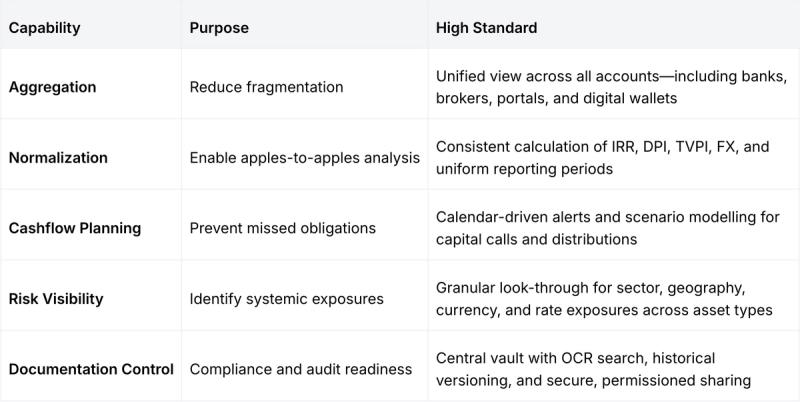
Operate with Institutional Discipline
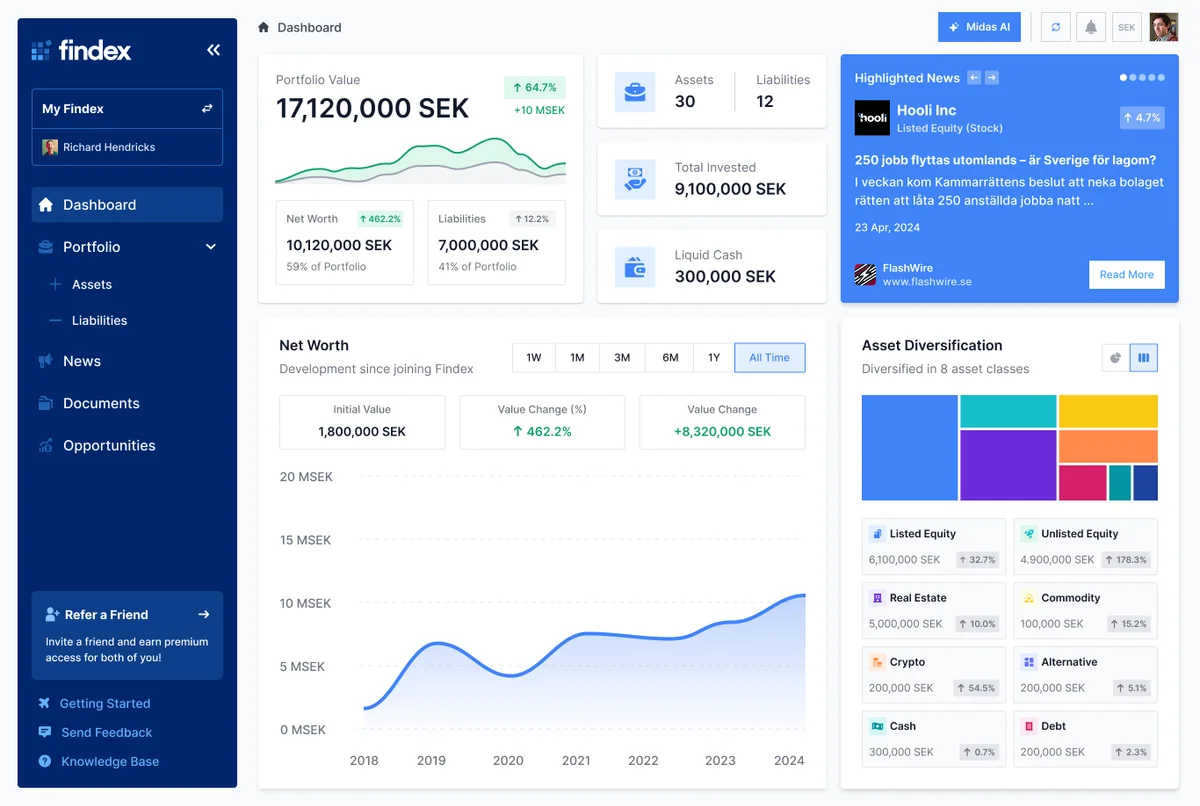
Findex empowers individual investors to professionalize portfolio management in private markets:
- Aggregate all accounts—banks, brokers, fund portals, SPVs, digital assets—into a single, real-time dashboard.
- Normalize valuations, track IRR and performance across both private and public assets.
- Automate calendars for capital calls and distributions, with timely alerts and performance monitoring.
- Visualize cross-portfolio exposures for better allocation and risk management.
- Centralize documentation for compliance and ease of access, with robust sharing controls.
Ready to bring institutional-grade oversight to your private market investments?
Start managing your private investments with Findex today.
FAQs: Access & Operations for Individual Investors
1) Do I need to be accredited to invest in private markets?
Generally yes, subject to jurisdiction and specific investment vehicle requirements. Many platforms and access vehicles require accreditation. Always verify eligibility criteria.
2) What minimums should I expect?
SPVs and syndicates often start around $1k–$10k; feeder funds $100k–$250k; direct LP funds typically $5M+. Actual thresholds vary by manager and strategy.
3) How do capital calls work?
Investors commit a certain amount and fund capital calls over the investment period. Ensuring adequate liquidity and monitoring upcoming calls is critical.
4) How do I measure performance in private assets?
Use internal rates of return (IRR), total value to paid-in (TVPI/MOIC), and distributions to paid-in (DPI) across different vintages to assess performance.
5) Can I exit early if I need liquidity?
Secondary markets exist but are limited and may require selling at a discount. Prudent planning assumes you will hold investments to term.
6) How do I avoid excess exposure to illiquids?
Monitor the denominator effect and maintain a clearly defined liquidity buffer. Use a consolidated dashboard for full visibility across asset classes.
7) What should I evaluate in a platform or feeder fund?
Assess manager quality and access, comprehensive fee structures, reporting standards, administrator reputation, and distribution pacing.
Keep reading
Related guides

How Private Markets Work: An Investor’s Guide to Understanding and Investing in Alternative Assets
Learn how private markets work—from private equity to real assets. Discover how they differ from public markets, what risks they carry, and how investors can access them today.

What Are the Risks of Private Market Investments? A Guide for Modern Investors
Private market investing offers unique opportunities but requires disciplined oversight. Learn to manage illiquidity, valuation lag, and reporting complexity with the right tools.

How to Start Investing in Stocks with Confidence
Learn how to invest in stocks as a beginner with our comprehensive guide. We'll walk you through the practical steps and psychological considerations for investment success.
Your complete net worth, finally in one place.
Join investors using Findex to consolidate, track, and grow their portfolios. One view of everything you own.
No payment information required.