
Treasury Yields Hit Two-Month High as Traders Price In More Fed Rate Hikes
The 10-year Treasury yield climbed to 4.64%, a two-month high, as traders priced in further Fed rate hikes and Schwab posted record earnings.
The 10-year US Treasury yield rose to 4.64% on July 21, its highest level in two months, as traders raised bets on additional Federal Reserve rate increases even as US equity indices closed at records. Futures markets assigned roughly a 68% probability to a rate hike at the Fed's September meeting, a sharp reversal from the rate-cut expectations that dominated markets a year earlier.
What happened
Fed Chair Kevin Warsh has repeatedly flagged inflation as the central bank's main concern, saying on July 1 that "prices are too high." The Federal Open Market Committee meets July 28-29 and is widely expected to hold rates steady, but policymakers entered their pre-meeting blackout period with traders already positioning for tightening later in the year.
Equity markets shrugged off the higher-yield backdrop on July 21:
- S&P 500 closed at a record 7,509.20, up 0.89%
- Dow Jones Industrial Average rose 0.74% to 52,224.64
- Nasdaq Composite added 1.29% to 25,837.21, led by chipmakers
Bank and brokerage earnings added to the picture. Charles Schwab reported record second-quarter revenue of $7.07 billion, up 21% year over year, with adjusted earnings per share of $1.62, up 42%. Daily average trades rose 57% to 11.9 million, and the firm added 1.4 million new brokerage accounts and $120 billion in net new assets, pushing total client assets to $13.08 trillion. Capital One posted second-quarter net income of $3.0 billion, or $4.73 per share, also ahead of estimates.
Why it matters
Higher Treasury yields raise the discount rate applied to future corporate earnings, a headwind for growth stocks even when trading volumes stay strong. They also cut two ways for portfolios: existing bond holdings lose value as yields rise, while new fixed-income purchases lock in higher returns than were available a year ago.
Schwab's numbers point to a separate trend. Retail investors kept trading and kept adding accounts through a stretch of rising-rate uncertainty, evidence that engagement with markets has not slowed even as the rate outlook shifted from cuts to hikes. For companies raising debt, a steeper yield curve also raises the cost of capital, a factor that matters most for growth-stage businesses without strong cash generation.
What to watch next
The July 28-29 FOMC decision is expected to be uneventful. The September meeting is the one markets are pricing for a move, and Warsh's public remarks between now and then will shape how firm that pricing becomes. A run of hotter-than-expected inflation data would push the odds higher; a cooler print would unwind them quickly.
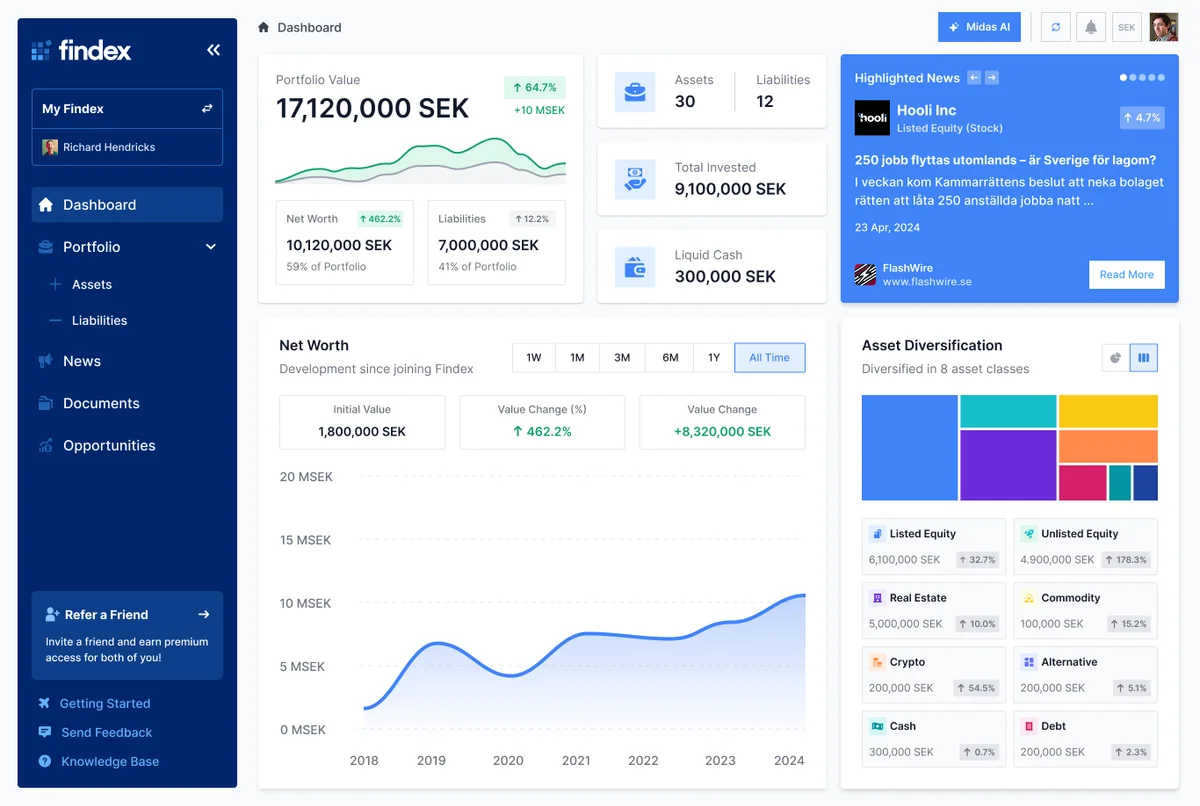
Investors holding both equities and fixed income are watching the same signal from two directions. A consolidated view across brokerage, savings, and bond holdings makes it easier to see how a shifting rate path changes the balance of a portfolio, rather than checking yield moves in one account and equity exposure in another.
Keep reading
Related trends

ECB Raises Rates to 2.50% as Iran War Fuels Euro Zone Inflation
The ECB lifted its deposit rate to 2.50% on September 10, its second hike this cycle, as energy inflation from the Iran conflict pushes prices higher.

Oil Nears $100 as Iran-Oman Hormuz Deal Nears Final Stage
Brent crude hit $97 as Iran and Oman near a Hormuz shipping deal, reviving inflation fears ahead of Friday's US CPI print and the Fed's next move.
Oil Surges Past $90 as US Strikes Reignite Strait of Hormuz Tensions
US strikes on Iranian rocket launchers near the Strait of Hormuz sent Brent crude above $90 on Monday, its highest level in months, reviving inflation risk.
Your complete net worth, finally in one place.
Join investors using Findex to consolidate, track, and grow their portfolios. One view of everything you own.
No payment information required.