
Global Bond Yields Hit Multi-Year Highs as Inflation and Oil Prices Extend the Selloff
Global bond yields hit multi-year highs as US 10-year reaches 4.63%, energy inflation persists, and Fed rate cuts are priced out for 2026.
The global bond selloff widened on Monday, pushing the US 10-year Treasury yield to 4.63%, its highest level since January 2025, as sustained energy inflation and fading central bank rate-cut expectations pressured fixed-income markets from Tokyo to New York.
What Happened
Government bond yields rose broadly on May 18 as investors priced in a prolonged period of elevated inflation driven by the Middle East conflict. Key data points:
- US 10-year Treasury yield: 4.63% (highest since January 2025)
- CPI (April): 3.8% year-on-year (highest reading since May 2023)
- PPI (April): 6.0% annual rate (roughly twice Wall Street's forecast)
- Brent crude: above $110 a barrel (sustained by Strait of Hormuz disruption)
Traders have fully priced out any Federal Reserve rate cuts in 2026. Futures markets now assign a roughly two-thirds probability to a rate hike before December, even with incoming Fed Chair Kevin Warsh yet to hold his first policy meeting.
European and Japanese bonds also fell, signalling the inflation shock is not contained to the US. The ECB's next rate decision falls on June 11. A Bloomberg survey published last week showed economists forecasting two quarter-point hikes from the ECB in 2026, with the first arriving next month.
Why It Matters for Investors
Rising yields create two distinct effects on portfolios.
First, existing bond holdings lose value. When new debt is issued at higher yields, older bonds paying lower coupons trade at a discount. A portfolio weighted toward longer-duration fixed income has faced material mark-to-market losses since January.
Second, the standard portfolio cushion breaks down in inflation-driven selloffs. Bonds typically rise when equities fall, providing ballast. During much of 2022, both asset classes fell together. A similar dynamic is back in play: S&P 500 and Nasdaq futures were both lower Monday morning as yields climbed.
BlackRock Investment Institute has held an underweight on long-term US Treasuries since earlier this year, citing energy-shock-driven term premiums. Short-to-intermediate duration fixed income, roughly two to ten years, is the preferred positioning across several major asset managers.
What to Watch
The next key US data point is the May CPI report, due in mid-June. The Fed meets June 17-18.
For European investors, the ECB's June 11 decision carries more immediate weight. Market consensus prices a 25 basis point hike as the base case, marking the first increase since the ECB began its cutting cycle in 2024. A second hike is priced for September.
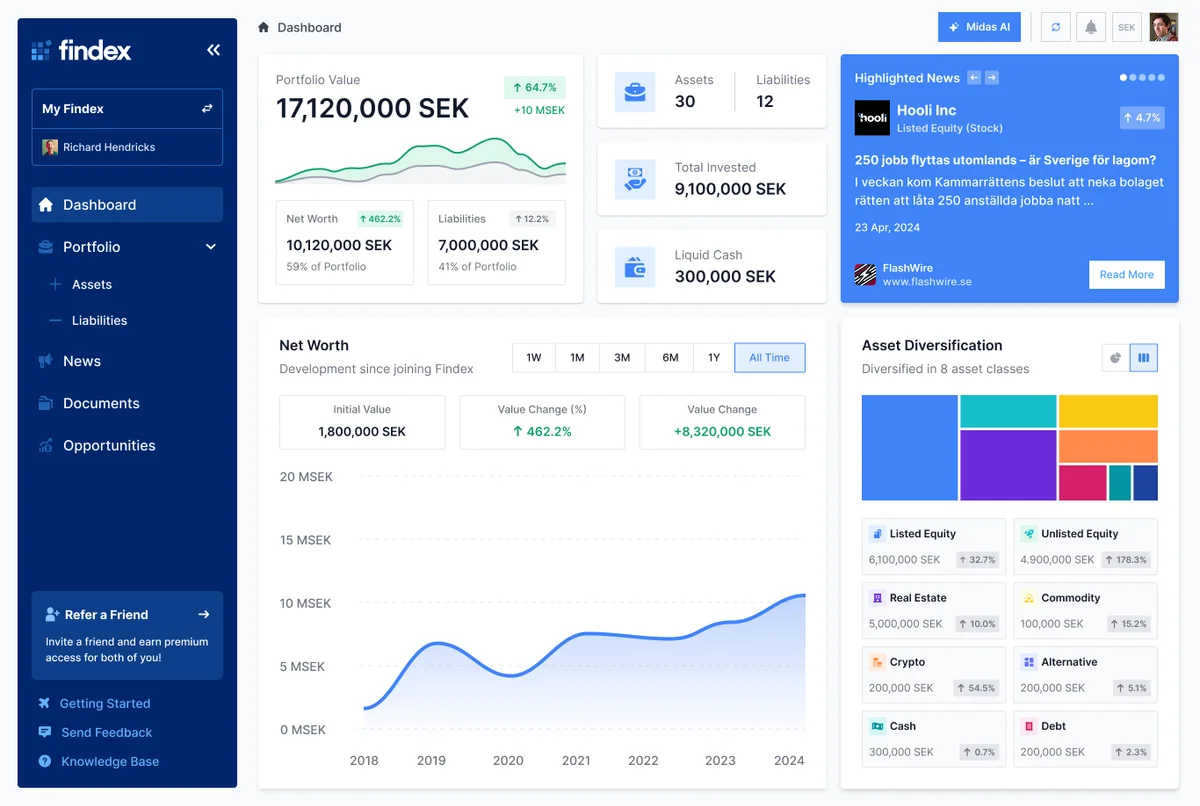
Investors with meaningful fixed-income exposure should review duration positioning. A portfolio built for a rate-cut environment carries different risk characteristics from one suited to flat or rising rates. Platforms that consolidate bond holdings, equity positions, and real asset exposure into a single net worth view make that kind of portfolio-wide assessment practical without a full manual audit.
Keep reading
Related trends
RBA Raises Cash Rate to 4.60%, a 15-Year High, on Energy-Driven Inflation
The Reserve Bank of Australia raised its cash rate 25bp to 4.60%, a 15-year high and its fourth hike of 2026, citing energy-driven inflation risks.

Oil and Bond Yields Surge as Trump Rejects Iran's Hormuz Proposal
Trump's rejection of Iran's Hormuz proposal sent oil toward $107 a barrel and pushed the 10-year Treasury yield to its highest level since 2007.
Global Bond Selloff Pushes 30-Year Treasury Yield to Highest Since 2004
A worldwide bond selloff has pushed US 30-year Treasury yields to their highest since 2004, driven by inflation, deficits and rising oil prices.
Your complete net worth, finally in one place.
Join investors using Findex to consolidate, track, and grow their portfolios. One view of everything you own.
No payment information required.