
EQT Launches Infrastructure ELTIF for European Retail Investors
EQT's new Nexus ELTIF Infrastructure gives individual investors access to roughly 50 portfolio companies spanning digital, energy and transport assets.

EQT, the Stockholm-listed alternative asset manager, launched EQT Nexus ELTIF Infrastructure on 29 April, opening its global infrastructure platform to individual investors across Europe. The evergreen fund seeds with exposure to roughly 50 portfolio companies and accepts subscriptions from May 2026. It is distributed through private banks, wealth platforms, and other intermediaries.
What happened
The new vehicle is structured under the EU's ELTIF 2.0 framework, which removed minimum investment thresholds in 2024. EQT Nexus ELTIF Infrastructure is offered at a lower minimum than traditional private asset structures, though EQT did not publish a specific entry ticket. The fund covers four sub-sectors:
- Digital infrastructure, including data centres and connectivity
- Energy and environmental assets
- Transportation and logistics
- Social infrastructure
It is the second EQT ELTIF for individual investors. The first, focused on private equity, launched in September 2025. EQT now operates seven evergreen vehicles across private equity, infrastructure, and real estate.
Why it matters
Until 2024, retail-sized investors had limited access to infrastructure private markets. Closed-ended funds typically required commitments of 5-10 million euro and locked capital for 10 years or more. The ELTIF 2.0 reform changed that by allowing fund managers to design vehicles with monthly subscription windows, lower minimums, and partial liquidity through repurchase mechanisms.
EQT's launch is one of the most concrete signals that large institutional managers are now competing for retail flows. Apollo launched three evergreen ELTIFs earlier this month covering credit and equity exposure. Providers expect roughly 100 ELTIFs to launch in 2026, representing 25-30% sector growth.
For individual investors, the appeal is portfolio diversification: infrastructure assets, including airports, fibre networks, and renewable energy, generate long-duration cash flows that behave differently from listed equities and bonds.
Context: ELTIF 2.0 momentum
ELTIF assets reached 34 billion euro at the end of 2025, with 268 authorised funds from 129 managers. The structure is intended to give EU retail investors regulated access to private markets while protecting them through diversification rules and disclosure requirements.
The growth has not been uniform. Moonfare wound up its private equity ELTIF in August 2025 after demand fell short. The format works for managers with brand recognition and distribution muscle. Boutique launches have struggled.
What to watch next
Three signals matter for European investors in the coming months:
- Distribution partnerships: Which Nordic and continental wealth platforms list the EQT fund. Avanza, Nordnet, and bank-owned platforms decide whether retail flow follows.
- Fee disclosure: Evergreen ELTIFs typically charge 1.0-1.5% management fees plus performance fees. Comparable structures in the US charge less. Pricing transparency will shape adoption.
- Liquidity behaviour in stress: Repurchase windows are typically capped at 5% of NAV per quarter. The first time investors test redemptions during a market drawdown will define the product class.
The strategic question is whether ELTIF 2.0 turns infrastructure from an institutional-only allocation into a standard component of retail portfolios. EQT's launch makes the answer matter sooner.
Keep reading
Related trends
SEC Proposes Wider Retail Access to Private Funds, Including 20% Performance Fees
The SEC voted to propose 20% performance fees, a wider accredited investor test and looser interval fund redemptions to open private markets to retail.

SEC Prepares Plan to Open Private Markets to Retail Investors
The SEC has proposed letting retail investors access private equity and credit through registered funds, and letting advisers charge wider performance fees.
Robinhood's Second Private Markets Fund Debuts With a Hedge Fund Fee Structure
Robinhood's second venture fund, RVII, began trading on the NYSE Wednesday, layering a 20% profit fee onto retail investors' access to private startups.
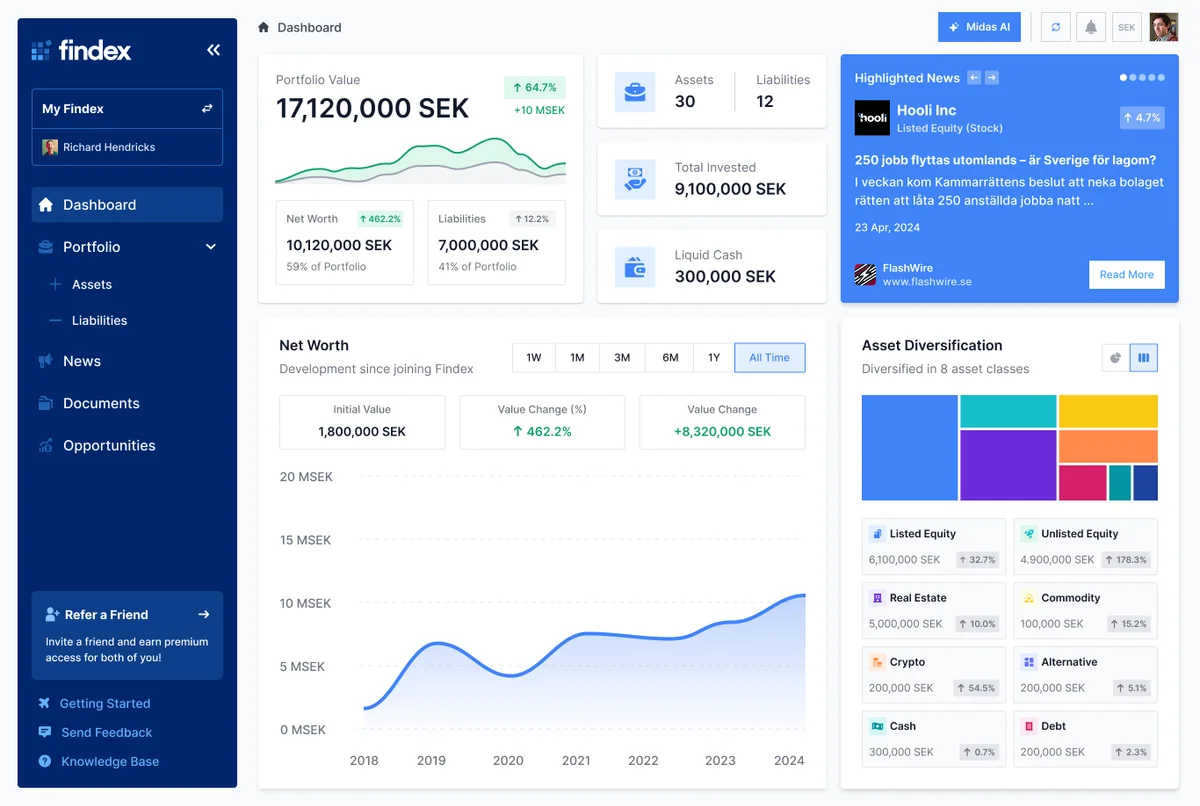
Your complete net worth, finally in one place.
Join investors using Findex to consolidate, track, and grow their portfolios. One view of everything you own.
No payment information required.