
US WealthTech Funding Halves in Q2 as Investors Shift to Smaller Deals
US WealthTech funding fell 54% year-on-year in Q2 2026, even as deal count rose 34%, as investors shifted from mega-rounds to smaller, targeted checks.

US WealthTech companies raised $557.8 million across 91 deals in the second quarter of 2026, down 54% from the $1.2 billion raised across 68 deals a year earlier, according to data published by FinTech Global on August 6. Deal count rose even as total funding shrank, a split that defines the quarter.
What happened
The average WealthTech deal size fell to $6.1 million in Q2 2026, down from $17.9 million in Q2 2025. Deals over $100 million dropped 65% from a year earlier, as investors pulled back from the largest, most speculative checks.
Key figures from the quarter:
- $557.8 million raised across 91 US WealthTech deals, down 54% year-on-year
- Average deal size fell to $6.1 million, from $17.9 million.
- Deals above $100 million fell 65%.
- Globally, WealthTech recorded 213 deals, down 7% from Q1's 230 but up 10% from 193 a year ago, with the average deal value falling to $6.2 million from $20.5 million.
The largest US WealthTech deal of the quarter went to Caplight Technologies, which builds data and transaction infrastructure for private markets. The company raised a $16 million Series A led by BlackRock and Fin Capital, with UBS Investment Bank participating and new investor LEAP Global Partners co-leading. Caplight tracks $4 trillion in funding-round data and more than $300 billion in proprietary secondary-market data for customers managing a combined $52 trillion in assets.
Why it matters
Capital is more available by deal count but thinner by dollar amount, a combination that raises the bar for founders to prove capital efficiency before a larger round follows. Investors funding fewer mega-rounds and more targeted checks points to a market rewarding infrastructure with defensible data assets over unproven consumer growth stories.
The Caplight round illustrates where that capital is going: private-market data and secondary-market plumbing, not new consumer dashboards. For investors and founders assessing where WealthTech is headed, the composition of Q2's funding says more than the headline total.
Context and what to watch
The 34% rise in deal count against a 54% fall in dollars is the sharpest divergence WealthTech has seen since the sector's 2021 funding peak. Whether Q3 2026 brings a return of larger rounds, or whether the smaller-check pattern becomes the new baseline, will show whether investors are recalibrating valuations or simply waiting for clearer winners to emerge.
The pullback comes as US regulators separately push to widen retail access to private markets, including proposals to open 401(k) plans to private equity and credit. That policy direction adds demand for exactly the kind of data and valuation infrastructure Caplight sells, a link worth watching as Q3 data arrives.
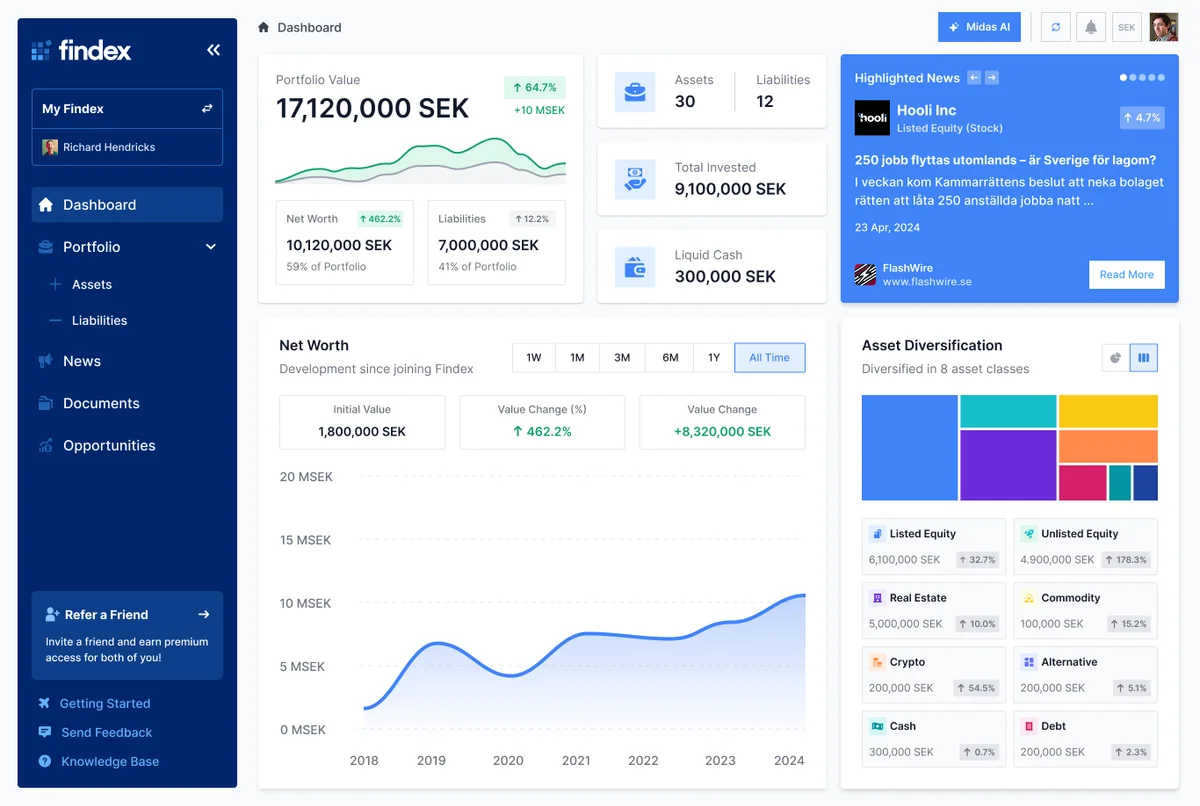
For investors tracking exposure across public and private holdings, this rotation matters beyond the aggregate statistics. Portfolio tools that consolidate holdings across banks, brokers and private stakes make shifts like this visible at the level of an individual net worth picture, not just in industry-wide funding tables.
Keep reading
Related trends
Vanguard Buys Adviser Custodian Altruist for a Reported $4.6bn
Vanguard is buying adviser custody platform Altruist for a reported $4.6bn, only its second acquisition in 51 years. Why the price is about distribution.

European WealthTech Funding Drops 46% in Q2 2026 to $185.5 Million
European wealthtech funding fell 46% to $185.5 million in Q2 2026, as average deal sizes dropped 65% year-on-year and investors grew more cautious.

Charles Schwab Posts Record $13.1 Trillion in Client Assets as Retail Trading Boom Accelerates
Charles Schwab closed May with $13.1 trillion in client assets and a record 11.8 million daily trades, signaling the retail trading boom is still building.
Your complete net worth, finally in one place.
Join investors using Findex to consolidate, track, and grow their portfolios. One view of everything you own.
No payment information required.