
Charles Schwab Posts Record $13.1 Trillion in Client Assets as Retail Trading Boom Accelerates
Charles Schwab closed May with $13.1 trillion in client assets and a record 11.8 million daily trades, signaling the retail trading boom is still building.

Charles Schwab closed May 2026 with $13.1 trillion in client assets, up 27% from a year earlier, as retail investors pushed daily trading volumes to a record average of 11.8 million trades, according to figures reported this weekend. The brokerage added 461,000 new accounts during the month, a 37% increase from May 2025, while margin loan balances climbed 38% above their level at the end of last year.
What happened
The numbers point to a retail trading boom that has continued to build through the first half of 2026, rather than cooling after last year's rally. Schwab's daily trade count, historically closer to 7 to 8 million on an average month, has now crossed into record territory as individual investors keep adding money and trading more frequently across both equities and options.
Key May 2026 figures for Schwab:
- $13.1 trillion in total client assets, up 27% year over year
- 11.8 million average daily trades, a company record
- 461,000 new brokerage accounts opened, up 37% from May 2025
- Margin loans up 38% since the end of 2025
The scale gap with newer entrants remains wide. Robinhood, the platform most associated with the retail trading narrative since 2021, held $344 billion in platform assets as of its most recent disclosures, a fraction of Schwab's base. Despite that, Robinhood trades at a price-to-earnings ratio near 54, compared with Schwab's 19, reflecting investor expectations that Robinhood has more room to grow from a smaller starting point.
Why it matters
Record trading activity and rising margin balances signal investor risk appetite, not just platform growth. Margin loans up 38% since December mean investors are borrowing more against their portfolios to increase market exposure, a pattern that amplifies both gains and losses when volatility returns. For anyone holding a diversified portfolio, the concentration of trading activity in a handful of large brokerages also means market-moving order flow is increasingly driven by retail decisions rather than institutional rebalancing alone.
The account growth figures matter beyond Schwab specifically. A 37% jump in new accounts in a single month, if sustained, points to a broader wave of first-time and returning investors entering markets during a period when major indices have already posted strong year-to-date gains, raising questions about how much of the current rally reflects earnings growth versus new capital chasing performance.
What to watch next
Schwab reports full second-quarter results in mid-July, alongside JPMorgan and other large banks, showing whether the May trading pace held through June or eased as markets absorbed a volatile stretch for semiconductor stocks. Robinhood's next monthly metrics release will offer a comparison point on whether smaller, younger platforms are gaining share from incumbents like Schwab or simply riding the same broader wave.
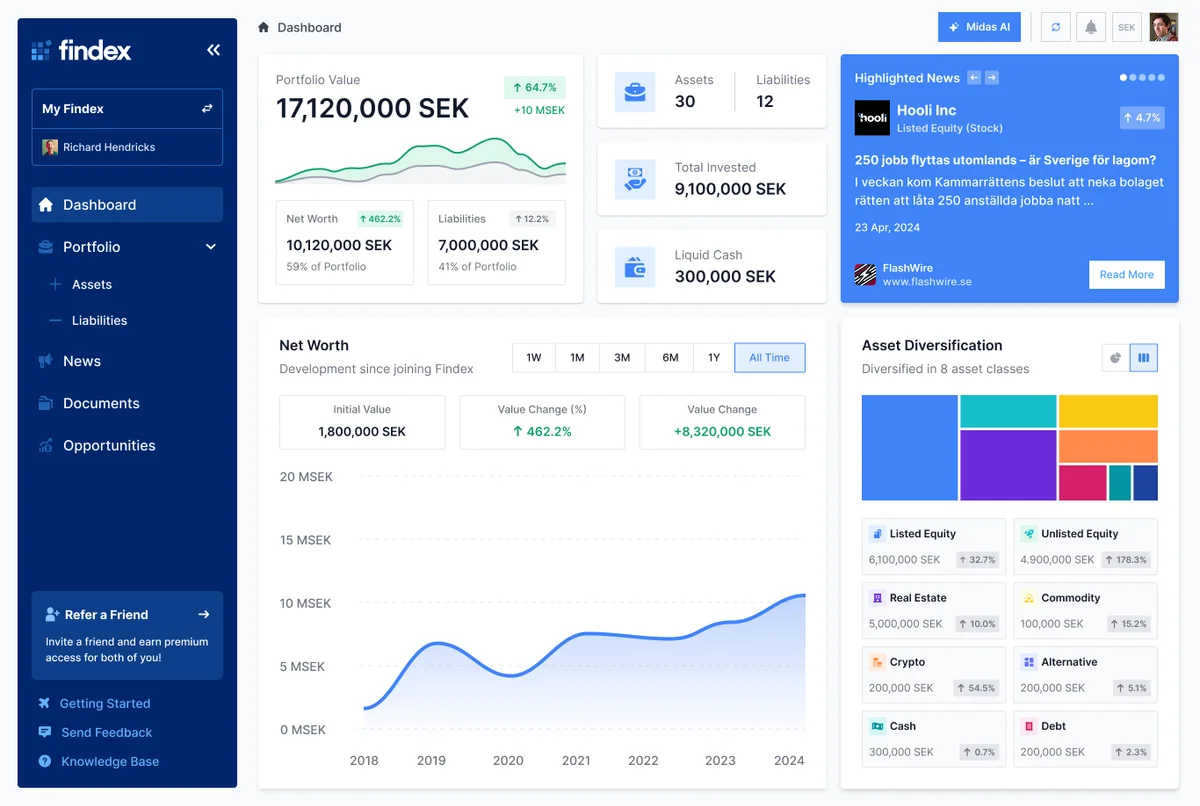
Investors managing positions across both incumbent brokerages and newer trading apps face a familiar problem: account-level statistics rarely add up to a clear view of total exposure. Portfolio tools that consolidate holdings across providers make it easier to see how much of a total portfolio sits in margin, cash, or concentrated positions, regardless of which platform generated the trade.
Keep reading
Related trends
Vanguard Buys Adviser Custodian Altruist for a Reported $4.6bn
Vanguard is buying adviser custody platform Altruist for a reported $4.6bn, only its second acquisition in 51 years. Why the price is about distribution.

European WealthTech Funding Drops 46% in Q2 2026 to $185.5 Million
European wealthtech funding fell 46% to $185.5 million in Q2 2026, as average deal sizes dropped 65% year-on-year and investors grew more cautious.

US WealthTech Funding Halves in Q2 as Investors Shift to Smaller Deals
US WealthTech funding fell 54% year-on-year in Q2 2026, even as deal count rose 34%, as investors shifted from mega-rounds to smaller, targeted checks.
Your complete net worth, finally in one place.
Join investors using Findex to consolidate, track, and grow their portfolios. One view of everything you own.
No payment information required.