
Swedish Economy Contracts 0.2% in Q1 2026 as Services Sector Drags
Sweden's GDP contracted 0.2% in Q1 2026, missing forecasts, as the services sector fell 0.8%. Annual growth slowed to 1.6%, the lowest in a year.

Sweden's economy shrank in the first quarter of 2026, with GDP falling 0.2% quarter-on-quarter, seasonally adjusted, according to Statistics Sweden (SCB) full quarterly national accounts published this morning. Annual growth slowed to 1.6%, below expectations and down from 2.1% in Q4 2025.
The contraction marks Sweden's first quarterly GDP decline in a year. Activity fell in January and February before recovering in March, leaving output close to its end-of-2025 level with a negative net reading for the quarter.
What the Data Shows
The 0.2% quarterly decline reflects diverging forces within the Swedish economy:
- Services sector fell 0.8%: the primary drag. Financial, professional, and trade-related services contracted as household caution restrained domestic demand.
- Goods production rose 1.1%: a partial offset, with manufacturing and export-linked industries recovering through late Q1.
- Exports grew 2.2%, imports grew 2.5%: net trade subtracted 0.1 percentage points from headline GDP.
- Fixed investment declined: businesses cut capital expenditure in Q1, reflecting caution in a still-elevated rate environment.
- Household consumption contributed positively: employment held steady, rising 0.1% in persons, though hours worked fell 0.3%.
The public sector posted a deficit of SEK 25.2 billion in Q1 2026, wider than the SEK 21.9 billion shortfall in the same quarter of 2025.
What It Means for Investors
For equity portfolio holders with Swedish exposure, a GDP contraction concentrated in services carries direct implications for domestic consumption-oriented companies on Nasdaq Stockholm.
The Riksbank held its policy rate at 1.75% in May. With inflation below the 2% target, the bank has signalled stability rather than tightening. The Q1 data does not shift that trajectory. It reinforces the case for the current hold, though a second consecutive quarterly contraction in Q2 would prompt closer scrutiny of whether rates need to move.
Key figure: 1.6% annual growth is below the European Commission's spring forecast of 1.8% for 2026 as a whole.
Sweden's export-reliant economy adds a secondary dimension. The Iran conflict has elevated oil costs, and global trade uncertainty from US tariff policy has weighed on demand for Swedish manufactured goods. The recovery in goods production during Q1 reflects partial insulation from earlier export orders, not necessarily a broader rebound.
What to Watch Next
Three indicators will determine whether Q1 marks a trough or the start of a sustained slowdown:
- Monthly GDP indicators: SCB's April and May monthly data will show whether the March recovery extended into Q2. If it did, the full-year 1.8% target remains achievable.
- Riksbank June decision: the bank's next full monetary policy review is in late June. A deteriorating Q2 GDP trajectory would test the credibility of the current hold.
- Government fiscal stimulus: planned measures for 2026 have not yet fed through to the data. Their impact would become visible in Q2 and Q3 output figures.
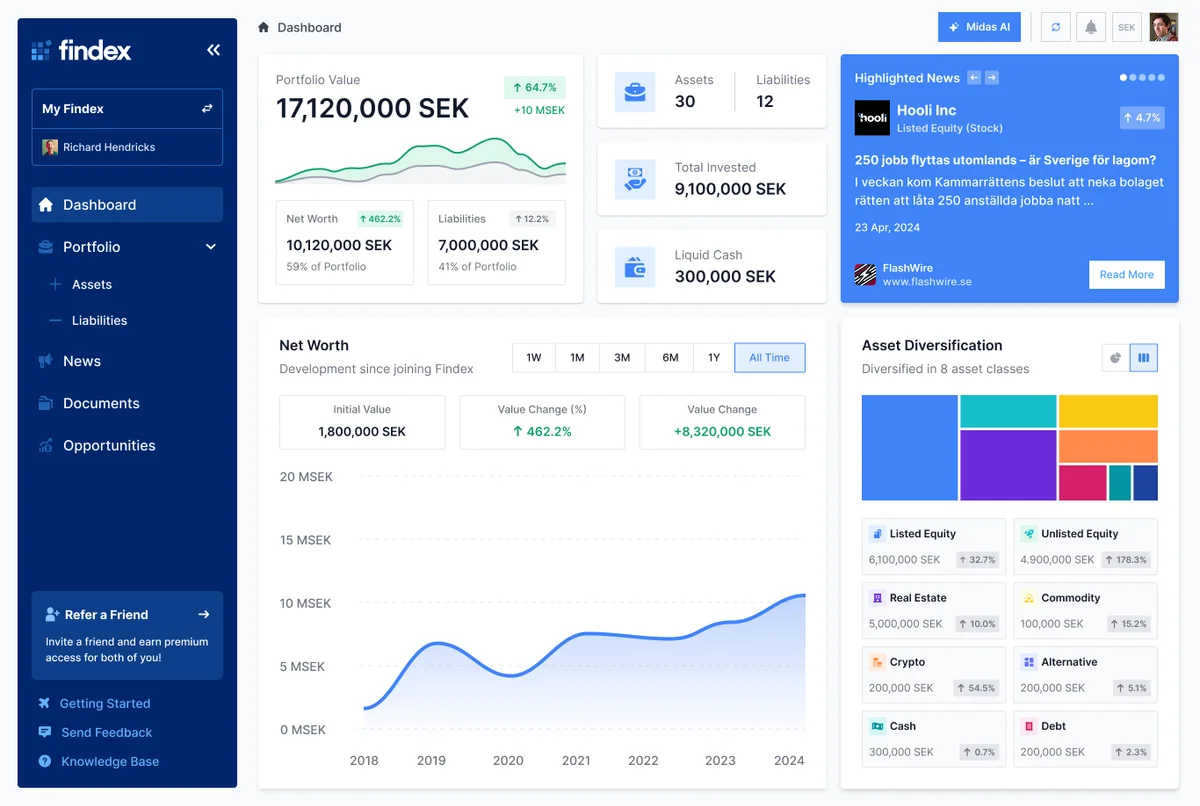
Portfolio trackers that consolidate data across Nordic brokers and listed assets give investors the clearest view of how Sweden's macro position is translating into actual portfolio performance.
Keep reading
Related trends

Sweden's Riksbank Holds Rate at 1.75% for Seventh Straight Meeting
Sweden's Riksbank held its rate at 1.75% for a seventh straight meeting and kept a hike on the table if Middle East tensions push up inflation.
Nordnet Posts Record Quarter as Nordic Broker Passes 2.5 Million Customers
Nordnet's operating profit rose 33% in Q2 as the Nordic broker passed 2.5 million customers, widening its lead over rival Avanza across four markets.
Riksbanken Rate Decision: Hold at 1.75% Expected as Sweden's Economy Stays Fragile
Sweden's central bank publishes its June monetary policy report on Wednesday, with economists and markets pricing no change to the 1.75% rate.
Your complete net worth, finally in one place.
Join investors using Findex to consolidate, track, and grow their portfolios. One view of everything you own.
No payment information required.