
Nvidia Partners With Wall Street Giants on $500 Billion AI Financing Platform
Nvidia has partnered with BlackRock, Goldman Sachs and four other firms on a $500bn financing platform that treats AI chips as loan collateral.
Nvidia has partnered with six of Wall Street's largest asset managers to mobilise more than $500 billion in financing for AI infrastructure, treating computing chips as collateral in a structure more commonly used for real estate and toll roads.
The company signed memorandums of understanding with Apollo Global Management, Blackstone, BlackRock, Brookfield Asset Management, Goldman Sachs and KKR on August 10. The platforms will let hyperscalers, frontier AI labs and enterprises borrow against data centre and chip assets rather than pay upfront for the hardware needed to build them.
What happened
Nvidia chief executive Jensen Huang told CNBC he approached only these six firms, and all six agreed. The arrangement effectively creates asset-backed lending facilities for AI compute, letting customers finance data centre builds against the value of the underlying chips and infrastructure rather than raising the full capital outlay themselves.
The scale is unprecedented for a single-sector financing push. Key figures from the announcement:
- $500 billion-plus in third-party capital targeted across the platforms
- Six partner firms: Apollo, Blackstone, BlackRock, Brookfield, Goldman Sachs, KKR
- Structures modelled on asset-backed lending used for commercial real estate and infrastructure, not typical corporate debt
Why it matters
Hyperscalers are already committing hundreds of billions of dollars a year to data centre buildouts. Rating agencies, including Moody's, have flagged that this capital expenditure is squeezing free cash flow and pushing technology companies toward heavier debt loads. Moving that financing off balance sheet, through special purpose vehicles backed by asset managers rather than direct corporate borrowing, changes who holds the risk if chip values depreciate faster than expected or AI demand slows.
For investors, the announcement marks an attempt to formalise AI compute as an investable asset class, alongside more established categories such as real estate and infrastructure debt. Investors with portfolios concentrated in AI-linked mega-caps already carry indirect exposure to this buildout through equity holdings. This financing model adds a second, less visible channel: private credit and structured debt tied to the same underlying hardware.
What to watch next
Three questions will determine how this reshapes portfolios over the next year:
- Whether the debt sits on the balance sheets of the six asset managers or gets distributed further into funds that reach institutional and eventually retail investors, including through evergreen or ELTIF-style vehicles already used for private credit.
- How rating agencies price the collateral risk on assets that depreciate quickly compared with real estate or infrastructure.
- Whether other chipmakers or hyperscalers replicate the structure, which would expand the size of this asset-backed AI credit market considerably beyond the initial $500 billion figure.
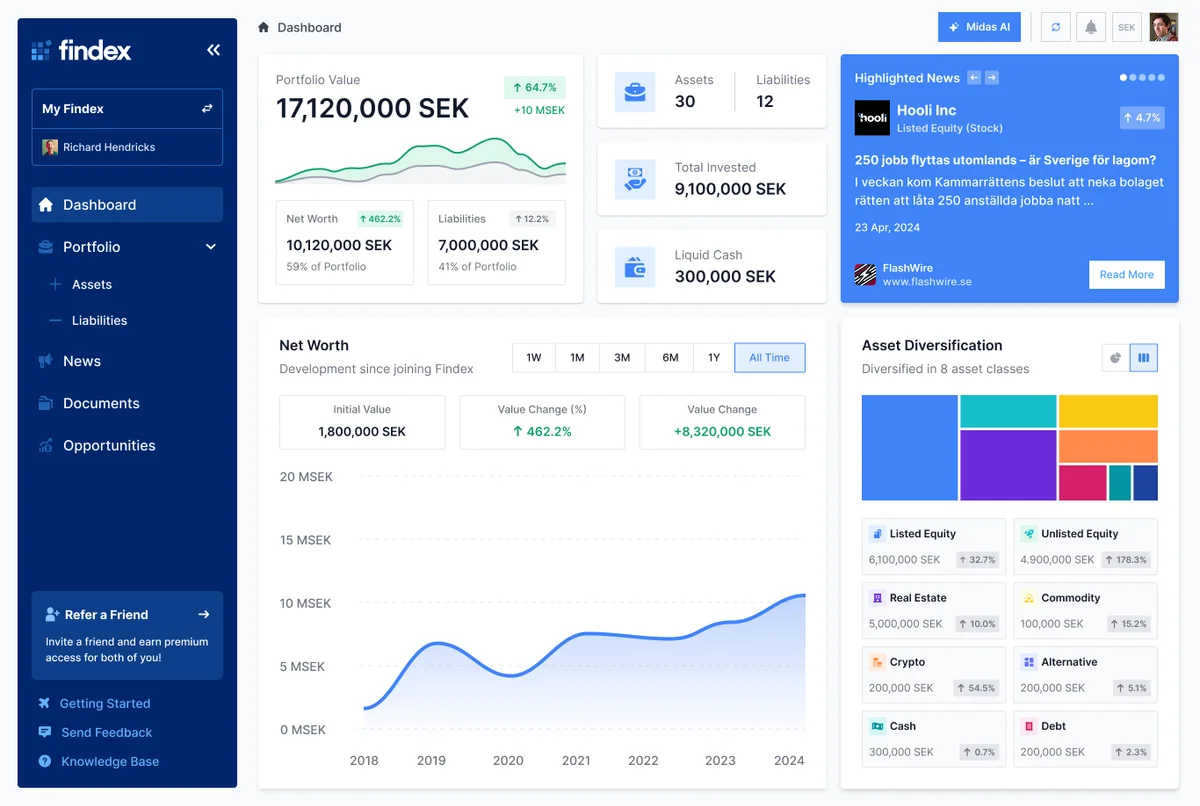
None of the six firms has disclosed pricing or timelines for when the platforms will begin extending capital. Investors tracking concentration risk across equities and private credit will want visibility into both exposures as this financing model scales. Portfolio tools that consolidate holdings across public equities, private credit funds and direct positions make it easier to see how much AI-linked exposure sits in a single portfolio once financing structures like this start feeding into fund products.
Keep reading
Related trends
SEC Proposes Wider Retail Access to Private Funds, Including 20% Performance Fees
The SEC voted to propose 20% performance fees, a wider accredited investor test and looser interval fund redemptions to open private markets to retail.

SEC Prepares Plan to Open Private Markets to Retail Investors
The SEC has proposed letting retail investors access private equity and credit through registered funds, and letting advisers charge wider performance fees.
Robinhood's Second Private Markets Fund Debuts With a Hedge Fund Fee Structure
Robinhood's second venture fund, RVII, began trading on the NYSE Wednesday, layering a 20% profit fee onto retail investors' access to private startups.
Your complete net worth, finally in one place.
Join investors using Findex to consolidate, track, and grow their portfolios. One view of everything you own.
No payment information required.