
IBM Stock Suffers Worst Day Since 1968 as Clients Shift Spending to AI Infrastructure
IBM shares fell 25% on July 14, erasing $69 billion in value, after the company said clients shifted spending toward AI infrastructure instead of mainframes.

IBM shares fell 25% on Tuesday, the company's steepest single-day decline since at least 1968, after IBM said second-quarter revenue and profit would fall short of Wall Street estimates. The stock closed at $217.07, down $73.16 on the day, erasing roughly $69 billion in market value in a single session.
What happened
IBM preannounced results ahead of its formal earnings call, scheduled for July 22, disclosing adjusted earnings per share of $2.93 against a Wall Street estimate of $3.02, and revenue of $17.2 billion against an expected $17.86 billion.
CEO Arvind Krishna said the shortfall traced to a shift in client spending in the final weeks of June. Rather than committing planned budgets to mainframe upgrades, customers redirected capital expenditure toward servers, storage, and memory to secure AI-related infrastructure ahead of anticipated price increases. The company's z17 mainframe line, which Krishna had called the strongest start to a mainframe program in IBM's history, saw sales fall well short of the low-single-digit decline the company had previously guided to.
Distributed infrastructure sales grew 37% year over year and software revenue rose 5%, helped by the HashiCorp and Confluent acquisitions, but neither offset the mainframe shortfall.
IBM's miss by the numbers:
- Adjusted EPS: $2.93 vs. $3.02 expected
- Revenue: $17.2 billion vs. $17.86 billion expected
- Stock: down 25.2% to $217.07, about $69 billion in lost market value
- Year to date: from up 4.8% to down 26%
Why it matters
IBM is a Dow Jones Industrial Average component, so a single-stock move of this size tests how much weight one holding can carry inside an index-tracking portfolio. Despite the drop, the Dow closed July 14 nearly flat, up just 9.63 points to 52,508.27, as gains in semiconductor stocks offset IBM's weight in the index. The S&P 500 rose 0.38% to a record 7,543.59 and the Nasdaq Composite added 0.9%.
The reallocation Krishna described, capital moving from enterprise software and legacy hardware toward AI infrastructure, mirrors a pattern investors have watched play out repeatedly this year in chip and cloud names. For portfolios weighted toward legacy technology, the IBM move is a reminder that AI-driven capital reallocation can hit balance sheets well outside the chip sector itself. The same shift lifting semiconductor and infrastructure stocks can just as quickly punish companies positioned on the losing side of it.
Context and what to watch
IBM holds its formal second-quarter earnings call on July 22, when analysts will press Krishna on whether the mainframe shortfall is a one-quarter timing issue or a structural change in enterprise IT budgets. The report lands in the middle of an uneven Q2 earnings season: JPMorgan, Goldman Sachs, Bank of America, Citigroup, and Wells Fargo all beat estimates a day earlier, posting some of the strongest bank results in years.
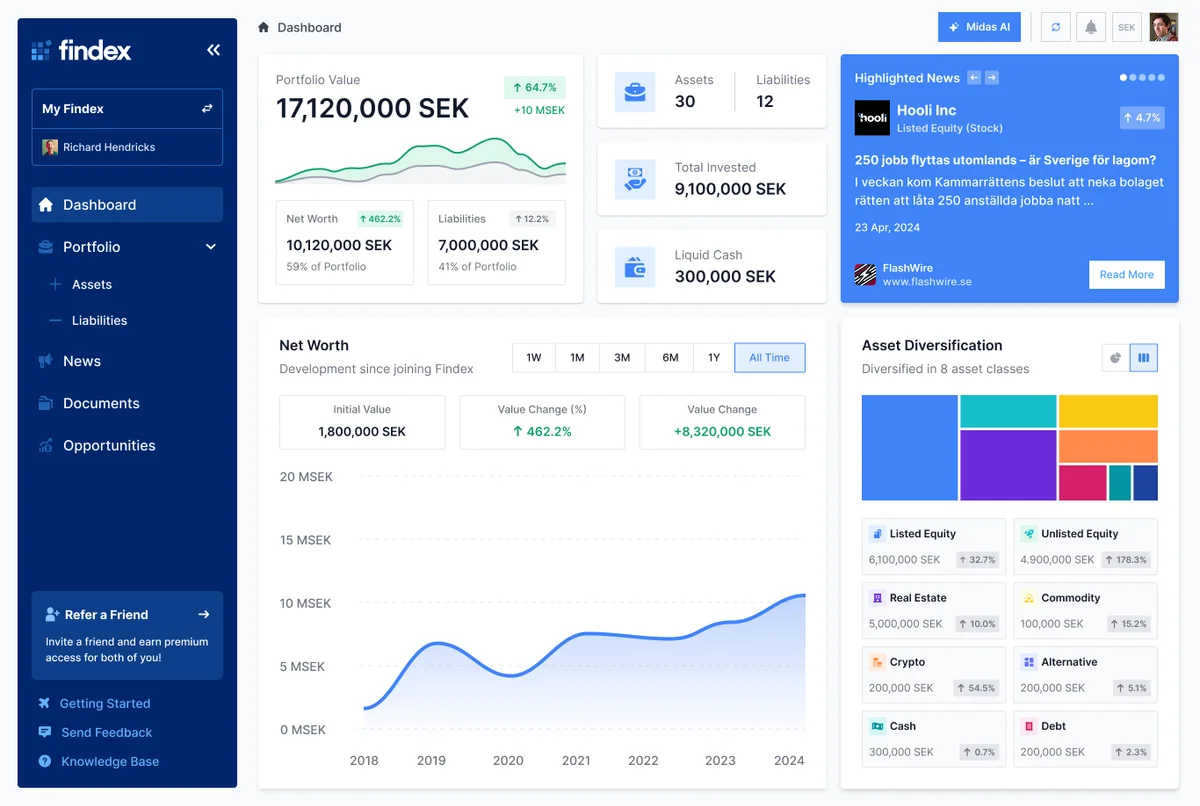
Investors tracking sector concentration in diversified portfolios will want to watch whether other legacy technology and infrastructure providers report similar client budget shifts over the coming weeks. Portfolio trackers that break down holdings by sector make it easier to see how much a single stock, still worth close to $200 billion after Tuesday's fall, is shaping a diversified portfolio's total return.
Keep reading
Related trends
John Ternus Becomes Apple CEO as Tim Cook Steps Into Chairman Role
John Ternus becomes Apple CEO on September 1, ending Tim Cook's 15-year run, as investors weigh what the leadership change means for index-heavy portfolios.
Nvidia Jumps 7% on Blowout Earnings, Deepening Its Grip on the S&P 500
Nvidia's fiscal second-quarter results and a 70% revenue growth forecast lifted global chip stocks and pushed its S&P 500 weighting toward a record 7.8%.
Shein Prices Hong Kong IPO at $27 Billion, Down 70% From Its Private Peak
Shein's Hong Kong IPO values the fast-fashion retailer at up to $27bn, a 70% drop from its 2022 peak, after failed listings in New York and London.
Your complete net worth, finally in one place.
Join investors using Findex to consolidate, track, and grow their portfolios. One view of everything you own.
No payment information required.